Frequently Asked Questions - Videos
Wave energy is the energy that's generated in the ocean when strong winds move over the ocean surface. The waves are generated typically thousands of kilometres from the coast and then transmit enormous amounts of kinetic energy through the ocean to the shoreline. It's exactly this powerful energy that the CETO Wave Technology aims to capture and convert into electricity.
How does wave energy differ from tidal energy?
Tidal energy is the energy that results through the interaction of gravity forces between the earth and the moon. It's not as potentially widespread as wave energy as there's not that many places on earth that have a sufficiently large fall to generate large amounts of electricity from the tides. Wave energy on the other hand is a globally distributed resource and therefore has huge potential impact to generate large amounts of electricity right across the globe.
What are the benefits of wave energy compared to other forms of renewable energy?
One of the big benefits of wave energy is the energy density. Water being some 800 times denser than air means that huge amounts of energy can be packed into very small areas meaning that the area for a wave farm will be much smaller than say a comparable solar farm with the same output. One of the other advantages is that it's much more predictable than say wind energy. Wind energy tends to vary in seconds and minutes, whereas waves can be predicted accurately hours and days in advance and certainly some of the best wave energy resource, say along the southern coastline of Australia, is available 24/7.
What are the key challenges of wave energy?
There's a couple of key challenges of operating in the wave energy space. One relates to the fact that you're in a wet and salty environment which means that corrosion is a key issue to be dealt with. The way that Carnegie deals with that is by utilising off the shelf componentry and materials that have been proven typically in the offshore oil and gas industry. One of the second challenges though is that it can be a quite an extreme environment to operate in from an energy point of view. Whilst most of the time you've got very consistent energy coming through, for small periods of the time you have very high energy events coming through, say when there's a storm, and it's critical that you've got a system that can deal with those high energy events but without the added capital expenditure that would be associated with building very large structures. Carnegie CETO wave technology is completely unique in the way that it deals with those high energy events. Firstly, we're fully submerged so we stay away from those breaking waves on the surface which are the most destructive elements of the ocean environment and then secondly, we have proprietary energy relief mechanisms throughout the system that means that the balance of the plant doesn't see those extreme forces.
How does Carnegie's CETO technology harness wave energy?
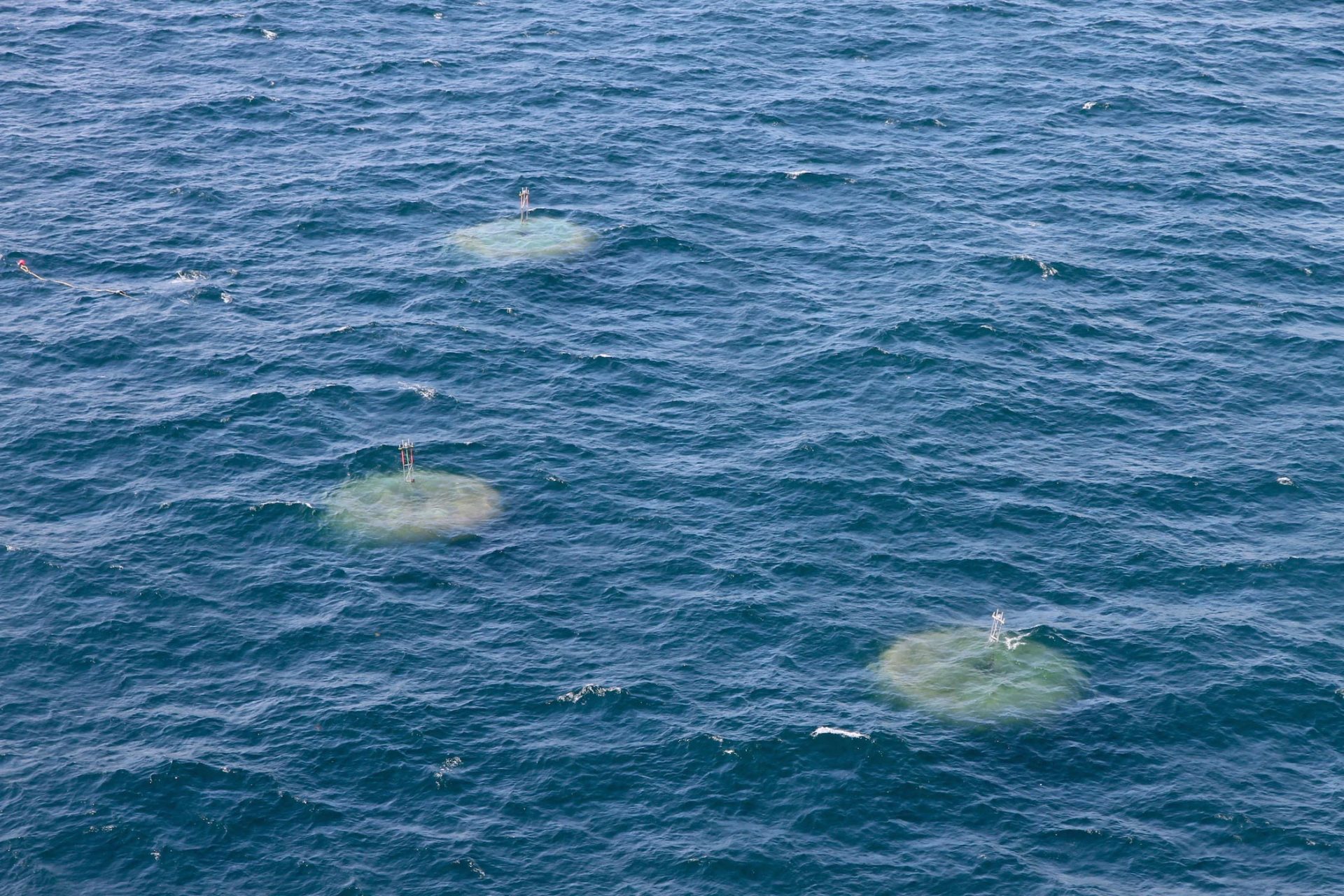
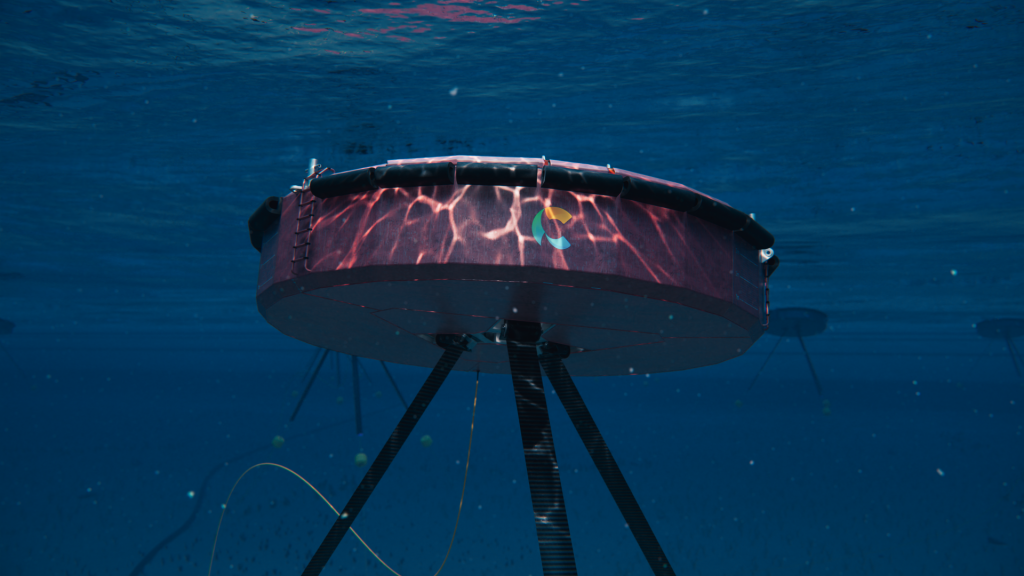
Carnegie's CETO wave energy technology is a unique approach to harnessing wave energy. The technology sits fully submerged beneath the ocean surface and consists of a buoy which moves with the ocean's waves. We capture the up and down movement of that buoy to drive a pump which is attached to the sea floor. The pump in turn delivers high pressure water through a pipe back ashore and once onshore that high pressure water is used to drive a hydro electric turbine, an off the shelf turbine being proven technology for many years. Because of that hydraulic pumping nature of the technology though we can also use the hydraulic power to power an off the shelf reverse osmosis desalination plant. This makes CETO capable of producing both clean power and clean water.
What is the environmental impact of Carnegie's CETO wave technology?
Minimising the environmental impact of the CETO wave technology is at the forefront of our engineers' minds when designing the system. One big advantage of Carnegie's approach is that by being fully submerged we have zero visual impact, we are effectively invisible when you're standing at the beach and you're looking at the ocean you see nothing. But secondly, and perhaps more importantly, is the impact on flora and fauna in the ocean environment and what we've discovered having deployed many systems now over the years is that not only does the system not displace marine life, it in fact attracts marine life acting like an artificial reef. In our CETO III trials off the West Australian coast last year, what our independent experts in fact told us was that we increased the amount of marine life from seven species before the system was deployed to 27 species when it was operating. So there's a high probability that the system when deployed at various sites around the world has the potential to increase the biodiversity in the areas that it operates in.
What is the market potential for wave energy?
The market for wave energy is enormous and it's global and untapped. Wave energy has been estimated to be able to supply more than the whole world's current power consumption but even capturing a small fraction of that would be a very lucrative market. One of the advantages of CETO is that it can do both power and water supply which in some ways effectively doubles the size of the market. There's the broader industrial scale market, that's a clear and obvious one over the longer term and in the shorter term there's some niche markets such as island markets and even defence installations around the world that offer huge opportunity for Carnegie's CETO technology.
Has Carnegie's wave technology been tested in the ocean?
The CETO wave energy technology has been developed over 10 years and with a spend of about $60 million. We've been through four generations of technology development which we imaginatively call CETO I, II, III and IV. CETO I was first developed back in 2005 and 2006 at our Fremantle research facility following on from some initial wave tank testing. CETO II followed and had approximate capacity of about 1 kilowatt. We knew at that point we had to scale it up and also make some improvements to the design. CETO III did that and achieved a scale up to about 80 kilowatts, so about an 80 times scale up from the CETO II generation. It also for the first time included some energy relief mechanisms to ensure that we had survivability over the longer term. The current generation is the CETO IV generation which is about a 150 kilowatt unit that's currently being deployed by the French power giant, EDF, Electricité de France, off La Réunion Island in the Indian Ocean. Carnegie will continue to deploy larger systems over time. The key driver here is that the larger the system, the higher the capacity, the cheaper the cost of energy and Carnegie's aim here is to generate cost competitive clean energy from the ocean's waves.
Have you got any customers for CETO yet?
One of the world's largest power companies, the French EDF, is the first licensee of Carnegie CETO wave technology. The signing of this licence followed an enormous amount of due diligence including the manufacture and testing of a CETO prototype in a wave tank. in France EDF is now deploying the CETO IV prototype on the French island of La Réunion in the Indian Ocean with the support of the French Government and the construction of the first commercial grid connected project will earn Carnegie a licence fee from the use of the CETO technology by EDF.
Is the CETO technology unique to Carnegie or are there others using a similar technology?
Carnegie's approach to wave energy technology is completely unique in being the only ocean tested fully submerged wave technology that removes the electrical generation from the point of capture. Carnegie protects these advantages through the maintenance of its intellectual property portfolio that consists of more than 100 patents and patents pending. Carnegie invests up to $1 million a year in the maintenance of this intellectual property portfolio globally.
Has the CETO technology been independently verified?
Throughout its development Carnegie has ensured that the CETO technology has been subject to rigorous independent verification. This occurred after the recent CETO III trials at Garden Island and it also occurred prior to the investment of French power giant, EDF, back in 2010 and we'll continue to do. Being an Australian Stock Exchange listed company, we believe this is an important part of our corporate governance as much as a part of our technology development process.
As a publicly listed company on the Australian Stock Exchange, Carnegie is held up to the highest standards in terms of corporate governance and financial transparency. Our Board of Directors are extremely well credentialed across engineering both onshore and offshore, as well as in finance and corporate governance. Our shareholders range from the French power giant, Electricité de France, right through to individual retail investors. What unites all of our shareholders is being passionate in realising the value from the CETO wave energy technology and for this reason we communicate regularly with all of our shareholders including open days down at our Fremantle Wave Energy Test Facility in Western Australia.
Who owns the CETO technology and who owns the rights to CETO?
Carnegie Wave Energy owns 100% of the intellectual property and development rights to the CETO wave energy technology. The intellectual property portfolio consists of over 100 patents and patents pending protected globally.
What support, if any, is there from Governments for wave energy?
There's a strong argument for short term government support for an industry like wave energy as it emerges against more powerful incumbents like coal and gas. Developing a wave technology is capital intensive and Carnegie will continue to seek funding from third party sources like governments and indeed utilities to lighten the burden on its shareholders. To date, Carnegie has been fortunate to receive funding from the Australian Government, the Western Australian State Government as well as international governments, like the Irish Government and the French Governments.
The CETO wave energy technology is the result of a lot of hard work and inspiration by Carnegie employees, past and present, operating in a collaborative and innovate work environment in the coastal town of Fremantle on Western Australia. Our team is passionate about creating a truly innovative and sustainable power generation technology from the ocean's waves. The technology has been developed now over 10 years and with a spend of about $60 million and we are now on the cusp of delivering our first wave to wire commercial demonstration project. The successful delivery of this wave to wire project will unlock a global market for Carnegie's CETO wave energy technology.
Frequently Asked Questions
CETO Technology
Contrary to popular belief, CETO is not an acronym, but the name of a Greek sea goddess (Greek: KETO). CETO is best known for bearing her husband Phorcys a host of monstrous children.
CETO is a fully submerged wave driven pump based technology. A specially designed and tested buoy, the CETO Buoyant Actuator, moves with the energy of the ocean’s waves, below the surface of the water. The Buoyant Actuator is attached to the pump via a tether, and the entire system is moored to the seabed. The Buoyant Actuators movements in harmony with the motion of the passing waves, drives the pumps which in turn pressurise water that then powers an “off the shelf” turbine, producing zero-emission, 100% renewable electricity. The high-pressure water can also be used to supply a reverse osmosis desalination plant, replacing greenhouse gas emitting electrically driven pumps usually required for such plants.
The hydroelectric turbines can be located onshore and offshore.
The CETO system distinguishes itself from other wave energy devices by operating out of sight and being anchored to the ocean floor.
How deep is the water CETO is submerged in?
One of the advantages of the CETO technology is its flexibility. The CETO technology can operate in water depths ranging from 20m-50m. By varying the length of the flexible tether these varying depths can be accomodated. The commercial scale CETO 3 unit deployed and independently verified in 2011 was submerged in water approximately 24 metres deep. The actual depth of deployment for a CETO project will depend on specific site conditions and forms part of Carnegie's site assessment process
What is the power output of a CETO unit?
The primary aim of the 2011 CETO 3 unit deployment and operation was to confirm and independently verify the peak CETO unit capacity. the rated capacity of the CETO 3 unit was approximately 80kW. The rated capacity of the CETO 5 unit used in the Perth Wave Energy Project is approximately 200kW.
This unit output is likely to increase over the coming years with the advancements in CETO unit design.
Carnegie awarded the CETO 3 verification work through a competitive process to Frazer-Nash who are one of the UK's largest providers of systems and technology engineering, specialising in the provision of independent and impartial advice to the defence, nuclear, power and energy, civil aerospace, rail, marine, petrochemical and industrial sectors.
How much space would a 20MW array take up on the sea floor?
A 20MW project, which might power approximately 14,000 households, would take up approximately 3hectares (7.5acres) of seabed. The CETO units anchored to the seabed will be completely submerged resulting in no visual impact.
What pressure fluid does a CETO unit produce?
The CETO units pump at high-pressure for a number of technical reasons. One of the reasons is to enable the CETO units to be used for direct desalination, that is, to be able to use the hydraulic energy to produce desalinated water directly and without first converting the energy to electricity. To achieve this, CETO units need to be able to pump sustainably at above the “osmotic pressure”.
Part of the 2011 CETO 3 project was to verify that at commercial scale the CETO units would produce sustained pressures required for direct desalination. Frazer-Nash, verified that the CETO 3 unit delivered sustained pressures of 77bar which is more than that required for sea water reverse osmosis desalination.
What size waves does the CETO device need to produce power?
The CETO devices start operating in waves with a height of approximately 1m. A typical Australian CETO project site will have waves of 1m for 95-99% of the time. This means the CETO devices will be generating 95-99% of the time.
How far below the surface are the CETO units?
The top of the Buoyant Actuator is approximately 1-2m below the surface of the ocean.
Where will the CETO technology be deployed?
The CETO technology is a portable technology which can be deployed anywhere there is a good wave resource. It has global applicability and because Carnegie owns 100% of the global intellectual property Carnegie intends to development CETO projects globally. These global markets will include North and South America, Europe, Asia and Australasia.
A CETO project is very similar to a run of river hydroelectric plant, except in a CETO project the pressure is provided by the waves not by gravity.
Will CETO units produce electricity and/or fresh water 24 hours a day?
The wave resource is a highly available resource meaning it can deliver energy predictably and consistently. The best wave energy sites globally have a 95-99% resource availability. This means that a CETO project will be generating electricity, desalinated water or both up to 95-99% of the time.
Who owns the CETO technology and who owns the rights to CETO?
Carnegie owns 100% of the CETO technology and its intellectual property. Carnegie invests significantly in the management and maintenance of its intellectual property portfolio and views the creation and protection of IP as a core competency. It employs a full time intellectual property manager, who is responsible for executing Carnegie’s IP strategy as well as the capture, documentation, protection and maintenance of the CETO IP.Additionally, Carnegie works with various leading patent attorneys.
An Independent Expert’s Report on the CETO intellectual property by Global IP Services described this investment as having “…created significant IP barriers to entry...”
Carnegie’s patent portfolio consists of multiple patent families covering the strategic elements of the CETO technology globally.
Carnegie has signed a technology licence and Joint venture agreement with global energy giant EDF.
Environment
Carnegie’s commitment to protect, sustain and enhance our natural resources means that environmental assessment and monitoring is carried out on all project sites prior to, during and after CETO deployment. Through every stage of testing of the CETO 3 unit, Carnegie has, and will continue to do extensive flora and fauna studies of the local area to ensure any impact to marine life is minimised. Results of the studies have found that, rather than having an adverse affect on marine life, the CETO unit did the opposite by attracting various forms of marine life.
During in the in-ocean testing of the CETO 3 unit at Garden Island, an underwater camera was installed at the project site prior to any work being done, to establish baseline data of the varieties of marine life that congregated in that area. A follow-up study was also commissioned to ensure that no marine life was displaced while the CETO unit was in the water, as well as when it was removed. In the study and total of 27 fauna species were noted which increased in abundance and biodiversity over time.
I'a diver, can I go out and see the CETO unit/s in operation?
As a member of the public you cannot dive on the CETO units in operation. For maritime safety reasons CETO units are deployed in an “exclusion area” which is designated by four cardinal makers. It is prohibited for unauthorised vessels or people to enter the exclusion area. If you wish to view the CETO units in operation please view the underwater video footage on our website.
How does the CETO unit survive storms?
A unique and novel feature of CETO, and a key element of the CETO intellectual property, is the ability of the system to dampen high loads within the pump and for the Buoyant Actuator to self-regulate the amount of energy absorbed from an incident wave, thereby limiting the total forces transferred to the pump and associated structural elements. This novel feature of CETO, allows the units to continue to operate unhindered through storm events without human intervention.
Where the wave energy is greater than the normal operating conditions, the unit continues to operate but its maximum output is limited to the rated capacity, set by the load limiting (energy relief) system.
CETO is also offered protection from storms because it lies beneath the ocean surface. The surface of the ocean is the most unpredictable place to be during a storm event.
Commercialisation
What is the stage of technology development for CETO?
The CETO technology has been developed over 10 years at a total cost to Carnegie and its partners of $60 million. During this time the CETO technology has progressed through initial wave tank testing, in-ocean scaled prototype testing and in-ocean demonstration of the 80kW rated CETO 3 unit. Carnegie's unique private wave energy research facility in Fremantle, Western Australia, with its dedicated offshore and onshore site has played a major role in the successful technology development and in-ocean operational testing providing Carnegie with the unique ability to repeatedly test multiple CETO prototypes.
TThe most recent technology milestone has been successfully constructing, installing, in-ocean operation testing and verifying the single CETO unit at commercial scale. The CETO 3 generation design has a rated capacity of 80kW and its testing and demonstration were independently verified by UK-based engineering firm, Frazer-Nash. The next generation CETO unit (CETO 4) has now been constructed and is ready to be deployed at Réunion Island by Carnegie's first technology licencee, French power giant, EDF. The rated capacity of CETO 4 is approximately 150kW.
What is the next step for commercialisation?
The next key step for commercialisation of the CETO technology is the delivery of a grid connected Commercial Demonstration project utilising the next generation of CETO technology, CETO 5. This project will demonstrate a grid connected CETO system in operation and deliver first revenues to Carnegie through the sale of electricity to the Australian Department of Defence. The project will be located at Garden Island, Western Australia and was made possible through the support of the Australian Federal Government through the Australian Centre for Renewable Energy’s (ACRE) Emerging Renewables Program (ERP); and the Western Australian State Government through the Low Emissions Energy Development (LEED) fund.
How much does a CETO project cost?
The CETO technology in the short term will be most competitive in remote island markets where it is displacing diesel generation. In the medium term CETO is expected to be competitive with offshore wind generation and in the long term competitive with onshore wind generation, which is generally regarded as the cheapest form of renewable energy currently available.
The CETO technology has global applicability so Carnegie has a global focus for developing its Project pipeline and commercial activities. Europe is considered the centre of the renewable energy world as well as the centre of the wave energy market. Carnegie is one of the few wave energy companies based outside of Europe. Carnegie has a Dublin based subsidiary CETO Wave Energy Ireland and a Scottish based CETO Wave Energy UK subsidiary and as part of the increased focus in the area 50% of Carnegie’s directors are now based in Europe. In addition, Carnegie’s technology licence and joint venture agreement with French power giant, EDF, provides the potential for widespread access and penetration of the European market.
The European market has a number of significant incentives for renewable energy and for marine energy specifically.
Who is EDF and EDF Energies Nouvelles?
The EDF Group is one of the largest power companies in the world. It operates over 150,000 MW of installed capacity and generates 630 TWh per year globally across a generation portfolio that includes nuclear, coal, gas, solar and wind. In December 2009, Carnegie and EDF EN, the renewable energy arm of EDF, signed a joint venture and technology licence agreement to deploy CETO projects throughout the Northern Hemisphere and Reunion Island.
The first activities associated with this agreement are the Reunion Island project to test a single CETO 4 unit ahead of a proposed 2MW CETO project which, if successful, would be expanded to a 15MW project at the same site.
Prior to the signing of this agreement, EDF EN undertook extensive due diligence that included co-locating a small team of EDF and EDF EN engineers at Carnegie’s corporate and design offices and commissioning an independent engineering report. Additionally, EDF EN engaged French marine defence contractor, DCNS, to manufacture a CETO unit prototype and submit it to wave tank testing at the University of Nantes in France.
DCNS is a leading European player on the world market for naval defence systems. The Group designs, builds and supports surface ships, submarines and mission-critical systems and equipment incorporating the most advanced technologies. Drawing on its dedicated teams, proven expertise and extensive industrial resources, DCNS is also expanding into new markets in civil nuclear energy, marine renewable energy and naval and industrial services. The DCNS Group employs 12,500 staff and generates annual revenues of around €2.5 billion. It is 75% French Government owned and 25% owned by the Thales Group.
DCNS is also working with EDF on the EPC of two French tidal power projects in conjunction with the Irish tidal energy company OpenHydro Group Ltd. DCNS has made a direct investment into the OpenHydro Group Ltd of $150 million and owns 60% of the company.
Careers
How can I apply for a job at Carnegie?
There is no specific time of year that Carnegie does an intake. However, depending on the needs of the company, resources may be required at different times throughout the year. The best way to apply for a job is to send your resume and covering letter to careers@carnegiewave.com
Please be advised that due to the high volume of applicants not all emails can be personally responded to, and Carnegie will contact you if any further information is required.